
September 29, 2026
Google’s newest Project Suncatcher update makes a compelling case for testing artificial-intelligence hardware in space. A prototype satellite is meant to show whether tightly linked AI chips can survive vibration, radiation and extreme thermal conditions while drawing power from sunlight. The engineering is fascinating. The accounting, however, cannot stop at the edge of the atmosphere.
Space changes the energy equation
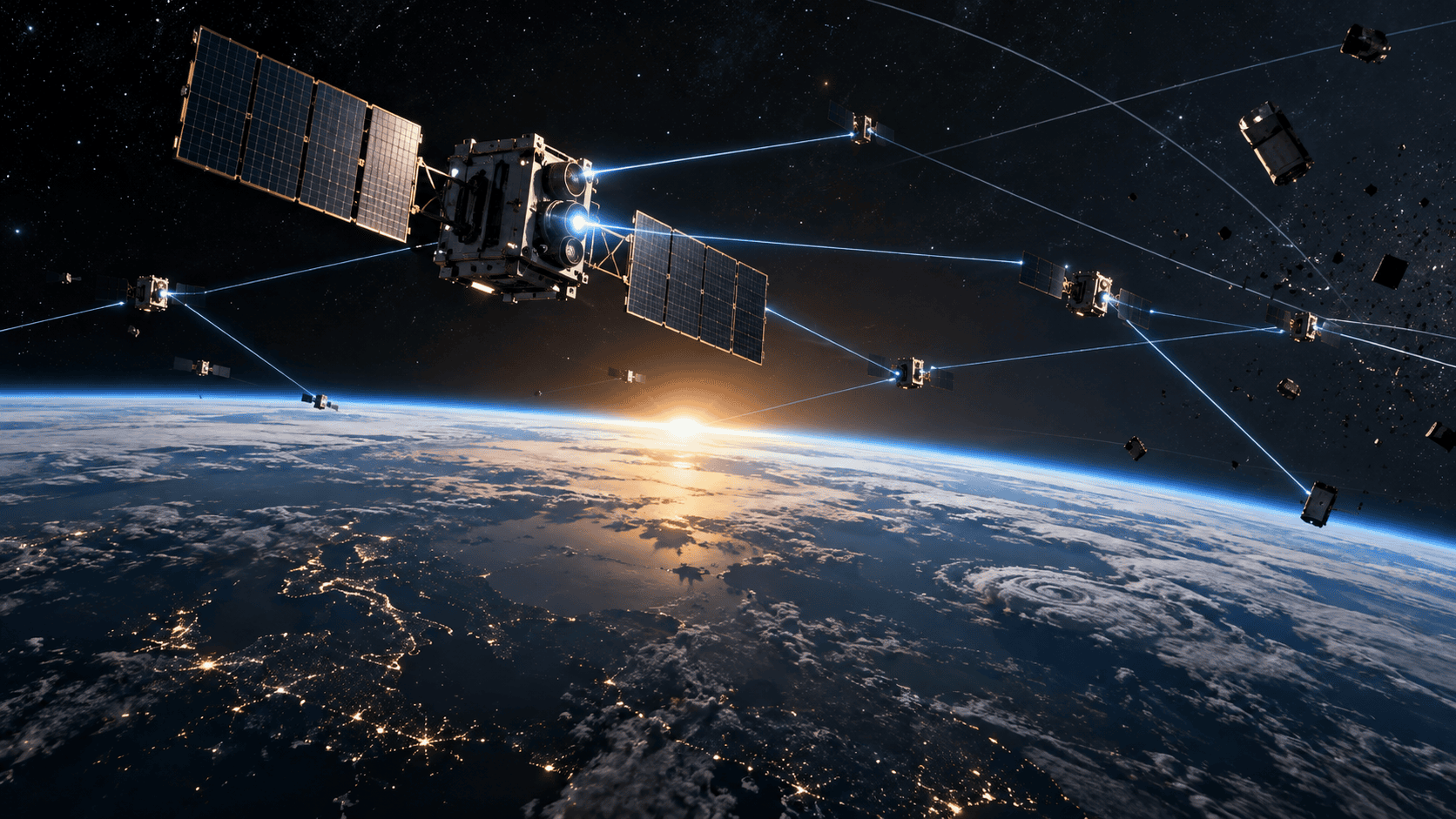
The attraction is easy to understand. In earlier Project Suncatcher research, Google described compact constellations of solar-powered satellites carrying its Tensor Processing Units and connected by optical links. In the right orbit, solar panels could work far more consistently than they do under clouds and night on Earth. That could take some pressure off electrical grids and reduce the water and land demands associated with terrestrial data centres.
But “solar-powered” is not the same thing as impact-free. Hardware still has to be manufactured, launched, tracked, cooled, replaced and eventually removed. Data still has to move between orbit and ground. Every design choice that improves computing density also raises questions about collision avoidance, failure modes and what happens when a spacecraft reaches the end of its useful life.
Orbit is infrastructure, not empty land
The European Space Agency’s 2026 Space Environment Report calls Earth’s orbital environment a finite resource. ESA says more than 300 launches placed over 4,000 payloads into orbit in 2025—roughly ten payloads per day—while more than three intact objects re-entered the atmosphere daily. Its long-term projections still worsen even when future missions follow better disposal practices, because debris already in orbit can continue generating collisions.
That context matters before AI constellations scale. The risk is not that one experimental satellite will suddenly crowd the sky. It is that a promising demonstration can become a template for many operators, each optimizing its own network while sharing the same orbital lanes. The familiar cloud-computing problem—externalizing infrastructure costs—could simply move upward.
The real test is lifecycle transparency
Project Suncatcher deserves a fair technical trial. It should also set a high standard for disclosure. Before space-based AI is sold as an environmental answer, operators should publish the expected size and lifetime of each constellation, show verifiable plans for deorbiting failed hardware, coordinate collision avoidance openly and compare total lifecycle impacts with efficient data centres on Earth.
That comparison must include launch emissions, satellite manufacturing, ground stations, replacement cadence, re-entry effects and the energy cost of moving data. It should also address governance: who is liable when equipment fails, which jurisdictions govern data processed overhead, and how independent researchers can verify sustainability claims.
Putting compute in orbit may become a useful part of the AI infrastructure mix. It may even solve problems that terrestrial facilities cannot. Yet the most credible version of the idea is not “free energy in space.” It is a carefully measured trade: abundant sunlight in exchange for a more difficult, shared and unforgiving operating environment. The companies building it should account for both sides before the launch cadence begins.
Sources
- Google: Project Suncatcher prototype update (September 24, 2026)
- Google Research: space-based scalable AI infrastructure (November 4, 2025)
- European Space Agency: Space Environment Report 2026 (September 14, 2026)