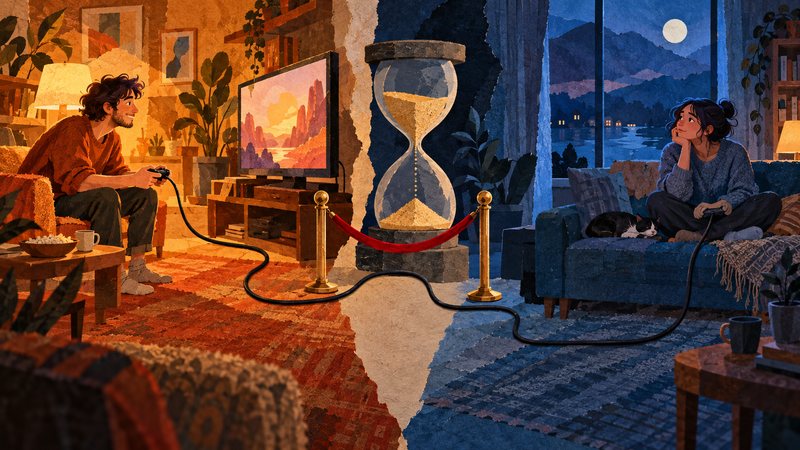
The hardest boss in a multiplayer game is sometimes four adults trying to agree on Thursday.
Someone works late. Someone has kids. Someone’s download is still crawling along. Finally, the calendars line up, the headsets come out, and the group gets to be bad at something together. For a few hours, that is the whole attraction.
Now add one more question: did everybody buy the same starting date?
Gears of War: E-Day opened its paid early-access window on October 1, with the general launch following on October 6. Premium Edition players, and eligible Game Pass subscribers with the Premium Upgrade, get the head start. Five days sounds modest until you look at a calendar. This time, it contains the entire first weekend.
There is an easy way to describe that arrangement: an optional perk for enthusiastic fans. There is also a less comfortable way to experience it: the game is available, your friends are playing, and your copy is waiting for Tuesday.
Both can be true. That is what makes paid early access worth discussing beyond whether a particular deluxe bundle offers enough extra skins.
The weekend is part of the product
There are perfectly reasonable reasons to pay for an earlier start. A player may have a rare free weekend, love the series, or want the other extras in the edition. Adults can decide how much their leisure time is worth. Nobody needs a lecture for spending their own money on something they enjoy.
But time is a peculiar bonus item. An outfit can sit in one person’s inventory without affecting anyone else’s plans. An earlier opening changes the options available to a whole group. If three friends buy in and one waits, somebody has to compromise: postpone the shared start, play separately, or spend more.
That is a hypothetical group, not a survey result. It illustrates what an edition comparison cannot measure. The value being sold includes the chance to participate while a game is new to the people around you.
A launch has a brief, lovely period when nobody knows the route. Players discover a mechanic by accident, lose in ridiculous ways and argue about whether the strange noise means trouble. Someone gets to say, “What on earth was that?” without another person immediately explaining the optimal strategy.
Those moments are still possible later. Plenty of people happily start games years after release. But starting together requires coordination, and a paid time gap adds another thing to coordinate. The frustration comes from knowing the barrier can disappear at checkout.
E-Day’s critical reception offers another reason to allow yourself time. The Verge’s Andrew Webster praised its focused action, while Kotaku’s initial campaign impressions were more mixed. Those are reviewers’ assessments, not our hands-on verdict. Reading beyond a score takes time too, especially when the first playable hours are already being marketed as something to secure.
A fair start can mean several things
To its credit, The Coalition has addressed parts of the timing problem. In its September 30 launch update, the studio said ranked Versus would open on October 13. It also said the weekly challenges available to premium players on October 1 would remain the same for everyone arriving on October 6, with the next refresh on October 13.
Those details matter. A shared ranked opening avoids starting the formal competitive season while standard-edition players are still locked out. Matching the challenge window also gives later arrivals access to the same initial set.
That does not erase five extra days of practice, and it cannot reunite every group’s first campaign session. Still, it is more useful to distinguish those things than to flatten the whole discussion into “pay to win.” Competitive timing, limited rewards and shared discovery are different concerns. A publisher can improve one without resolving the others.
The same precision should apply to the language on the box. Here, early access means a short premium window before the general release. It should not be confused with buying an unfinished game that is being developed in public. The familiar phrase covers two very different arrangements, which is another reason the actual dates should be easy to find.
For anyone planning a group session, the most useful edition chart might be a message in the group chat: which day can we all actually start? That answer can matter more than a cosmetic pack, and it does not have to match the earliest date a storefront offers.
Publishers have choices here too. They can state both dates prominently, make subscription entitlements clear and explain which events begin before the wider audience arrives. They can also sell desirable extras without attaching a different opening time. None of that requires treating the people who buy premium editions as the problem.
The reason this stings is that game launches offer something unusually social. Buying a new game can be an excuse to reconnect, reclaim an evening or hear an old friend’s laugh through a headset. The software makes that possible; the group makes it memorable.
On October 6, E-Day’s general release will arrive and this particular five-day gap will close. The bigger question remains for the next launch: how much of the excitement belongs to the game, and how much belongs to getting there together?
It would be nice if the second part did not need an upgrade.