Editorial — September 28, 2026.
The same platform that makes it easier to synthesize a creator’s style should make it easier to defend the creator’s identity.
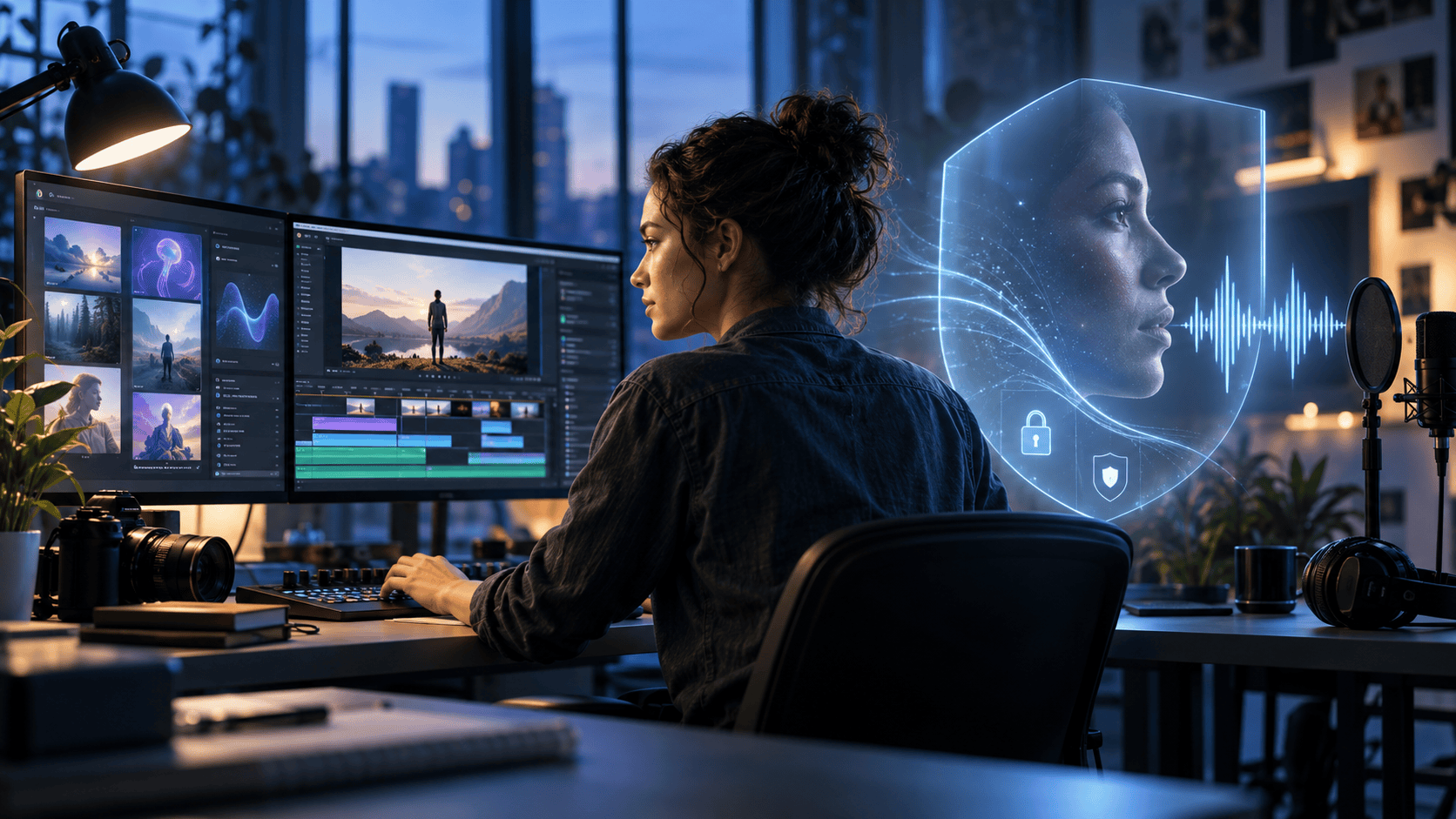
YouTube’s 2026 creator update offers a useful test of that principle. The company is adding a conversational editing assistant powered by Gemini Omni to Shorts and the YouTube Create app. Creators will be able to use prompts to trim speech, synchronize music, add text hooks, and rearrange frames. At the same time, YouTube says it is expanding likeness detection for voices and faces.
Those announcements belong together. Generative production tools and identity safeguards are often presented as separate product lines—one for creativity, another for trust and safety. In practice, they are two halves of the same system. A platform cannot responsibly accelerate synthetic media while treating impersonation as an after-market problem.
Creation is getting cheaper; identity is getting more valuable
Prompt-based editing lowers the cost of producing polished video. That is good news for small creators, educators, and businesses without a full production team. It can turn a rough recording into a structured Short, speed up repetitive edits, and make experimentation less intimidating.
But as the technical work becomes easier, a recognizable face, voice, and point of view become more economically important. They are the scarce part of the package. A convincing imitation can borrow that trust without borrowing the years of work that created it.
That is why protection cannot begin only after a fake goes viral. Detection needs to operate close to upload, give the affected person a fast way to review a match, and preserve enough context for meaningful appeals. It should also distinguish between malicious impersonation, licensed collaboration, commentary, parody, and accidental similarity. A blunt takedown machine would create a different kind of harm.
Consent should travel with the media
The strongest protection model would not rely on detection alone. Platforms should support durable consent records that answer basic questions: Who authorized this use? Which voice or face was licensed? For what project, audience, and period? Can the permission be revoked? Was the final output materially changed after approval?
Those records do not need to expose a creator’s private contract. They do need to give the platform and the creator a shared reference when a dispute occurs. A label saying “AI-generated” is useful for viewers, but provenance is more useful for enforcement. It connects an output to the permission behind it.
Protection must be available before creators are famous
Likeness tools are easiest to justify for celebrities because the commercial damage is obvious. The larger need is among ordinary creators: the streamer with a modest but loyal audience, the teacher whose voice is trusted by students, or the local journalist whose face carries credibility in one community. They may have less legal leverage and fewer staff members watching for abuse.
Platform-wide creation tools should therefore come with platform-wide protection. Enrollment must be understandable, reports must be visible, and response times must not depend on follower count. If the system can learn enough about a person to reproduce their presentation style, it can also give that person practical control over unauthorized copies.
YouTube’s decision to announce editing assistance and expanded likeness detection in the same product cycle is the right direction. The standard should go further: every major capability that makes synthetic media easier should ship with an equally concrete answer for consent, attribution, and remedy.
Sources
- YouTube: Made On YouTube 2026 (September 2026)
- Google: Made On YouTube 2026 platform update (September 23, 2026)