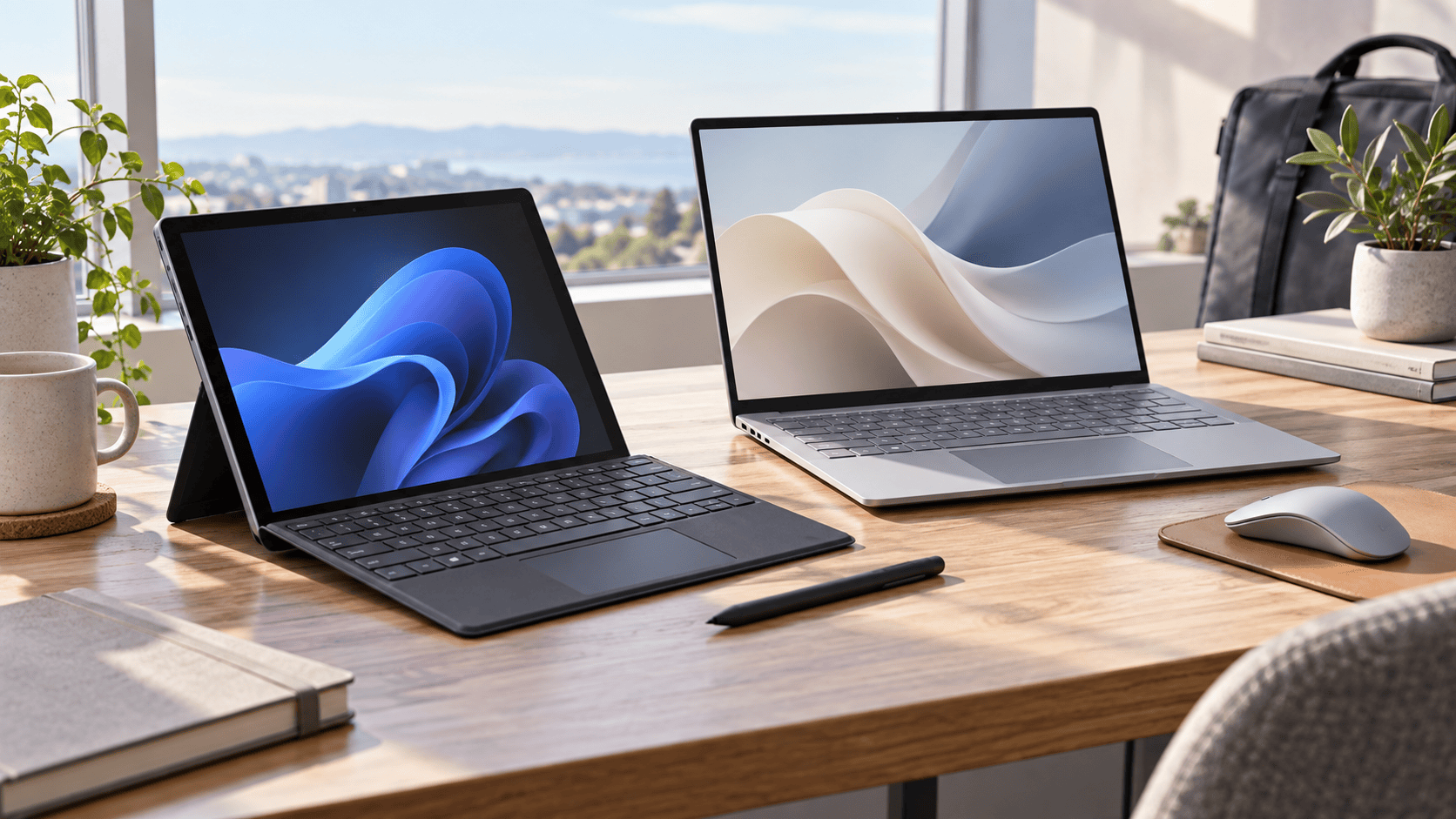
Microsoft’s latest compact Surface machines are trying to make a practical case for AI hardware: keep the computer light, improve the work it can do locally and avoid treating every new feature as a reason to carry a bigger laptop.
The refreshed 12-inch Surface Pro and 13-inch Surface Laptop use Qualcomm’s Snapdragon X2 Plus processors. Microsoft introduced them in September ahead of October availability, emphasizing improved graphics, efficiency and on-device AI processing.
Two shapes for different routines
The Surface Pro remains the flexible choice for people who want a tablet that can become a small laptop with an optional keyboard. The Surface Laptop is the more familiar machine for writing, browsing and working on the move. Both make a straightforward argument: portability is a feature in its own right, not a compromise to apologize for.
Microsoft’s performance and battery claims come from its own testing. Those numbers are useful as a starting point, but they aren’t a substitute for independent reviews, especially when real workloads mix browser tabs, video calls and applications that don’t behave like benchmarks.
Local AI needs a real job
A faster neural processor may let supported tools run with less delay and less dependence on a cloud service. That doesn’t make every assistant feature offline, nor does it automatically make every task more private. Software still has to use the hardware sensibly.
The appealing version of this story isn’t that a laptop can advertise a larger AI number. It’s that a smaller machine might do more useful work without getting in the way. For most people, that’s a better reason to upgrade than another acronym on the box.
Sources: Microsoft Devices Blog; Microsoft Surface Pro specifications.